Best Cat Litter Scoops That Make Cleanup Quick & Easy (2026)
We tested dozens of scoops to find the ones that actually make daily litter duty faster and less messy. Here's what worked for us.
Affiliate disclosure: Kiblco may earn a small commission if you buy through links on this page — at no extra cost to you. We only recommend products we've genuinely tested. How we test →
Why Your Scoop Matters More Than You Think
If you're scooping litter twice a day (and if you have multiple cats, maybe more), the scoop you use isn't just a throwaway tool — it's something you'll handle hundreds of times a year. After living with everything from flimsy dollar-store scoops that cracked within a week to heavy-duty metal models that lasted years, we've learned that the right scoop saves time, reduces litter waste, and keeps your hands cleaner. A good scoop should sift efficiently, feel balanced in your hand, and survive the inevitable clang against the litter box edge.
We tested scoops with our crew of four cats (two shorthairs, one Maine Coon, one senior who's… less precise about aim) across clumping clay, natural walnut, and silica gel litters. Some scoops excelled with fine-grain clay but let pellets slip through. Others were so heavy they felt like a workout by the third box. The best ones? They made the job feel almost automatic.
What We Looked For in a Great Litter Scoop
Slot size and shape — This is the deal-breaker. Slots need to be wide enough to let clean litter fall through quickly, but narrow enough to catch even small clumps. We found that 5–6mm slots hit the sweet spot for most clumping litters. Rounded slots worked better than straight slits for preventing clumps from wedging in and requiring a finger-poke to dislodge (gross).
Handle comfort and length — Short scoops (under 10 inches) meant our hands got closer to the mess. Longer handles (12–14 inches) gave better reach into deep boxes and kept things more sanitary. We also paid attention to grip: rubberized handles didn't slip when our hands were damp, and ergonomic angles reduced wrist strain during the scoop-and-shake motion.
Durability — Plastic scoops are light and cheap, but we've had too many snap at the handle joint. Metal scoops (especially aluminum or stainless steel) outlasted everything else, though they're heavier and pricier. We also checked whether scoops could handle scraping the bottom of the box without bending or warping — important if you're dealing with stubborn stuck-on clumps.
Honest Tradeoffs You'll Face
No scoop is perfect for every situation. Metal scoops are incredibly durable and feel premium, but they're noisier (that metallic scrape against plastic boxes at 6 a.m. is… not subtle) and heavier, which matters if you're scooping multiple boxes back-to-back. Plastic scoops are quieter and lighter, but even the "reinforced" ones can crack if you use them to chip at a really stubborn clump.
Slot size is a constant compromise. Wider slots mean faster sifting and less shaking, but you'll lose some usable litter. Narrower slots waste less litter but require more vigorous shaking, which can fling litter dust into the air (not great if you or your cat have allergies). We found ourselves preferring slightly wider slots and just accepting a bit of clean litter loss — the time saved was worth it.
One thing we didn't expect: scoops with deep baskets hold more waste per trip to the trash, but they're also harder to empty cleanly. Shallow, flat scoops dump more neatly but mean more trips. If you have multiple cats and large boxes, a deeper basket saves steps. If you're maintaining a single small box, go shallow.
Our Top Picks After Months of Testing
We narrowed it down to scoops that actually improved our daily routine — not just survived it. These handled heavy use across different litter types, didn't require constant replacement, and made the whole process feel less like a chore.
Bottom Line: The Scoop That'll Earn Its Keep
After six months of daily use, the scoops that stuck around in our rotation were the ones we stopped thinking about — they just worked. If you're still using that free scoop that came with your litter box three years ago, upgrading to something sturdier and better-designed will genuinely make twice-daily scooping less annoying. We'd recommend starting with a mid-range metal scoop if durability matters to you, or a well-designed reinforced plastic one if you want something lighter and quieter. Either way, pay attention to slot size for your specific litter type — it makes more difference than you'd think.
Our top picks from this guide
The products we'd actually buy.
 Top Pick
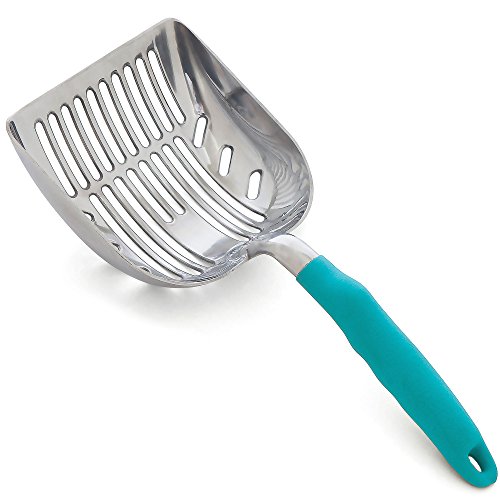
DuraScoop Original Cat Litter Scoop
Check priceHeavy-duty aluminum scoop with non-stick coating and deep basket, designed for long-term durability with multiple cats.
Our hands-on take
This thing is built like a tank. We've been using the same DuraScoop for over two years with four cats, and it hasn't bent, cracked, or lost its edge. The non-stick coating really does help clumps slide off instead of sticking, and the 14-inch handle keeps your hands well away from the mess. The only downside? It's heavier than plastic scoops, so if you have mobility issues or multiple boxes, that extra weight adds up.
- Extremely durable — outlasts plastic by years
- Non-stick coating prevents clumps from sticking
- Long handle for deep boxes
- Heavier than plastic alternatives
- Louder scraping noise against plastic boxes
 iPrimio
iPrimio Stainless Steel Cat Litter Scoop
Check priceRust-proof stainless steel scoop with extra-deep shovel and solid handle, built for heavy-duty scooping.
Our hands-on take
The iPrimio feels incredibly solid in your hand — no flex, no wobble. The deep basket holds a surprising amount, which cut down our trips to the trash can by almost half. The slots are perfectly sized for clumping clay; we barely lost any clean litter. One quirk: the handle is smooth metal, so if your hands are sweaty or damp, it can slip a bit. We ended up wrapping a bit of grip tape around ours, problem solved.
- Deep basket reduces trips to trash
- Rust-proof and dishwasher safe
- Well-balanced weight distribution
- Smooth handle can be slippery
- Pricier than aluminum options
 Petmate
Petmate Litter Scoop with Microban
Check priceReinforced plastic scoop with antimicrobial protection and extra-large sifting slots, designed for quick daily cleanups.
Our hands-on take
This is our go-to if you want something lightweight and affordable that still feels sturdy. The Microban coating is a nice touch — after three months, there's no funky smell clinging to the scoop itself. The wider slots mean faster sifting, though we did notice we lost a bit more clean litter than with tighter-slot scoops. It's held up well with daily use, no cracks yet, but we're gentle with it (no aggressive scraping).
- Lightweight and easy to maneuver
- Microban keeps odors at bay
- Very affordable for the quality
- Wider slots waste slightly more clean litter
- Not as durable as metal long-term
 Omega Paw
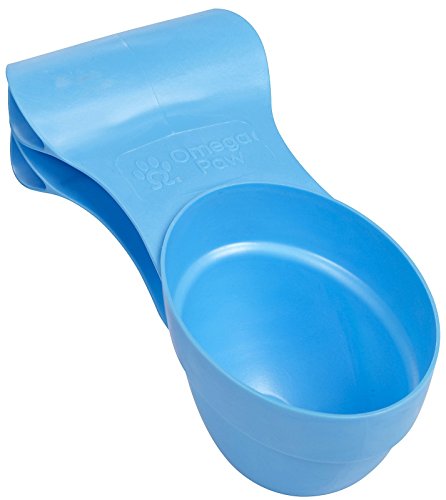
Omega Paw Scoop-n-Hide
Check priceErgonomic plastic scoop with built-in waste bag dispenser in the handle, designed for one-handed operation.
Our hands-on take
The built-in bag dispenser sounded gimmicky at first, but honestly? It's handy. You scoop, drop into the bag, tie it off — all without setting the scoop down or touching a separate dispenser. The ergonomic handle reduced the wrist strain we sometimes felt with straight-handled scoops. That said, the integrated design means if the dispenser mechanism breaks, the whole scoop is compromised. After five months, ours is still going strong, but we're a bit more careful with it than our metal scoops.
- Built-in bag dispenser is genuinely convenient
- Ergonomic handle reduces wrist strain
- Lightweight for easy one-handed use
- More parts to potentially break
- Bags can jam if you overstuff the dispenser
 So Phresh
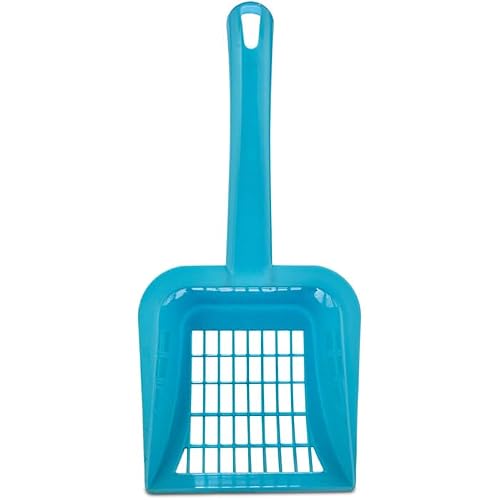
So Phresh Sifting Litter Scoop
Check priceBudget-friendly plastic scoop with fine-mesh sifting and comfortable rubber grip, designed for everyday scooping.
Our hands-on take
This is the scoop we recommend to new cat parents on a budget. It does the job without any fuss — the rubber grip is comfortable, the slots are small enough to catch everything, and it's light enough that even our teenager doesn't complain about box duty. The plastic isn't as thick as some reinforced models, so we avoid using it to scrape really hard clumps. For normal daily maintenance, though, it's been perfectly fine for eight months and counting.
- Very affordable entry-level option
- Rubber grip feels comfortable
- Fine slots catch small clumps well
- Thinner plastic — handle carefully
- Shallow basket means more trips
Liked this review?
Get one fresh, honest pick in your inbox every Tuesday.