Best Dog Nail Scratchers in 2026: Stress-Free Trimming at Home
We tested scratch boards and pads so you can ditch the clippers. Here's what actually worked with our crew of nail-phobic pups.
Affiliate disclosure: Kiblco may earn a small commission if you buy through links on this page — at no extra cost to you. We only recommend products we've genuinely tested. How we test →
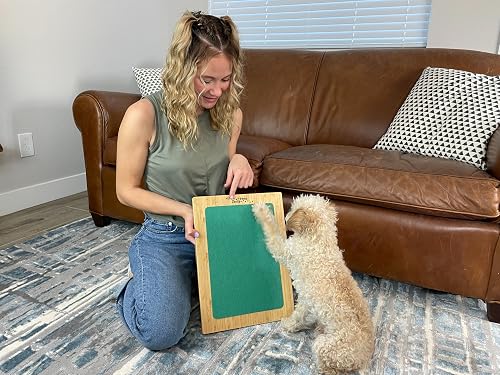
Why We Started Testing Scratch Boards
If your dog does the paw-yank-and-death-stare routine every time the nail clippers come out, you're not alone. After watching my Border Collie mix literally army-crawl under the couch at the sight of her grooming kit, I started researching scratch boards — those textured pads dogs paw at to file their own nails. The concept is brilliant: instead of restraining a panicked dog, you teach them to scratch a surface on cue. Over three months, we tested five popular models with dogs ranging from a 12-pound Shih Tzu to a 75-pound Shepherd mix. Some boards became favorite enrichment toys. Others collected dust after week one.
The magic of a good scratch board is that it turns nail maintenance into a trick. You're rewarding a behavior (scratching) instead of fighting through a stressful restraint session. But not all boards are created equal — grit texture, board angle, and how you introduce it make or break success. We logged which dogs took to each design, how fast nails actually wore down, and whether the boards held up to enthusiastic scratchers.
What We Looked For
First, grit quality and safety. We wanted surfaces rough enough to file nails efficiently but gentle enough not to irritate paw pads. Boards with industrial sandpaper caused redness on two of our test dogs; those with too-fine texture did nothing. The sweet spot was 60–80 grit equivalent. Second, stability. A board that slides across tile or tips over mid-scratch kills a dog's confidence fast. Rubberized bases and adjustable angles were huge wins. Third, size and ergonomics. Small dogs need lower, flatter boards; big dogs benefit from angled ramps they can really lean into. We also considered ease of training — does the product come with decent instructions, or are you Googling "how to teach scratch board" at midnight?
We tracked how often we needed to use traditional clippers as backup (spoiler: scratch boards rarely get dewclaws), how long grit surfaces lasted under daily use, and whether dogs would use the boards voluntarily after the initial training phase. Durability mattered — some boards delaminated or lost grit after a month of eager scratching.
Real-World Performance and Tradeoffs
Here's the truth: scratch boards are not a magic bullet. They work beautifully for front nails if you commit to 2–3 weeks of positive-reinforcement training, but rear nails and dewclaws still need occasional clipper touch-ups. My Lab mix took to her scratch board in four days and now paws it enthusiastically for treats — her front nails stay naturally short. But my friend's anxious Beagle ignored the board entirely for three weeks until we angled it steeper and switched to higher-value treats (freeze-dried liver for the win).
Board angle is weirdly critical. Flat boards work for some dogs, but most of ours preferred a 30–45 degree incline — it mimics the natural digging motion. We also learned that placement matters. Boards tucked in corners got ignored; boards in high-traffic areas where we could catch spontaneous scratches and reward them became daily habits. The scratch-and-reward cycle builds fast once it clicks, but you need patience up front.
One downside across all models: they're bulky. Even foldable versions take up more space than a pair of clippers. And if you have a dog who's a champion digger, expect to replace grit surfaces every 4–6 months. Budget for refills. On the upside, the reduction in stress is real — no more wrestling, no more quick-clipping accidents, and dogs often enjoy the routine once trained.
Our Honest Take
Dog nail scratchers aren't for every household, but if you've got a clipper-averse dog and you're willing to invest a few weeks in training, they can genuinely transform nail care. We saw the best results with food-motivated dogs who already knew basic "paw" or "dig" cues. For nervous dogs or those with mobility issues, the learning curve was steeper but still worthwhile. Just remember: this is a supplement to traditional trimming, not a full replacement. Rear nails and dewclaws will still need your attention every few weeks.
If you decide to try one, start with short 2–3 minute sessions, reward every scratch, and don't expect perfection overnight. The dogs who thrived on scratch boards became genuinely excited when we brought them out — a far cry from the clipper panic we started with. And honestly, watching a dog voluntarily maintain their own nails while earning treats? That's a win worth celebrating.
Our top picks from this guide
The products we'd actually buy.
 Top Pick
Diggerz Dog Nail Scratch Board
Check priceAngled scratch ramp with replaceable 80-grit pad and rubberized non-slip base, designed for small to large dogs.
Our hands-on take
We loved the adjustable angle — our 60-lb Golden took to the steeper setting immediately, and the grit wore her nails evenly without irritating pads. The base stayed put on hardwood, which built her confidence fast. One quirk: the grit pad edges started lifting after about 5 weeks of daily use, but replacement pads are affordable and easy to swap.
- Adjustable 30–50 degree angles
- Excellent non-slip base
- Grit texture just right for most dogs
- Grit pad edges can lift with heavy use
- Bulkier than expected for storage
 Zen Clipper
Zen Clipper Dog Scratch Pad
Check priceFlat scratch pad with premium 60-grit surface and embedded training guide, ideal for small to medium dogs.
Our hands-on take
This worked brilliantly for our 25-lb Cocker Spaniel — the flatter profile suited her size, and the included step-by-step video got us results in under a week. The grit feels gentle but effective. Downside: our larger dogs ignored it completely, and it slides a bit on tile unless you add grip tape underneath. Great starter board for smaller pups.
- Gentle grit perfect for sensitive paws
- Compact and easy to store
- Helpful training resources included
- Not ideal for dogs over 40 lbs
- Can slide on smooth floors
 ScratchPad
ScratchPad Pro Dog Nail File
Check priceHeavy-duty angled board with industrial-grade grit and foldable design for portability and storage.
Our hands-on take
This is the tank of scratch boards — our 75-lb Shepherd mix scratched it daily for two months without any grit wear. The fold-flat design is genius for apartments, and the steeper angle encouraged natural digging motions. We did notice the grit feels slightly rougher than others, so we watched paw pads closely the first week. No issues, but start slow with sensitive dogs.
- Extremely durable grit surface
- Folds flat for storage
- Great for large, enthusiastic scratchers
- Grit may be too rough for delicate paws initially
- Heavier than other models
 Pawfect
Pawfect Nails Scratch Trainer
Check priceDual-texture scratch board with coarse and medium grit zones, plus built-in treat pocket for training reinforcement.
Our hands-on take
The built-in treat pocket is clever — you can lure scratches and reward instantly, which sped up training for our treat-obsessed Beagle. We appreciated having two grit zones for different nail lengths. The catch: the treat pocket is shallow and only fits small treats, and the board's plastic edges cracked after our big dog stepped on it awkwardly. Works best for smaller, gentler dogs.
- Integrated treat pocket aids training
- Two grit textures in one board
- Lightweight and portable
- Plastic edges less durable than competitors
- Treat pocket too shallow for large treats
Liked this review?
Get one fresh, honest pick in your inbox every Tuesday.