Best Dog Toothbrushes & Brushing Kits for 2026
We tested five popular dog toothbrushes with our pack to find which ones actually make daily dental care less of a wrestling match.
Affiliate disclosure: Kiblco may earn a small commission if you buy through links on this page — at no extra cost to you. We only recommend products we've genuinely tested. How we test →
Why we spent three weeks brushing dog teeth
Let's be honest — most of us know we should brush our dog's teeth daily, but actually doing it? That's another story. After my vet gently reminded me (again) that dental disease affects 80% of dogs by age three, I committed to testing the most popular toothbrushes and kits on the market. I recruited three very patient dogs: my 4-year-old Lab mix, a friend's anxious Chihuahua, and a neighbor's Golden Retriever who thinks everything is a chew toy.
The results surprised me. Some highly-rated brushes worked beautifully for one dog but were disasters for another. The finger brushes I thought would be easiest? My Lab treated them like a snack. The electric option I was skeptical about? Actually became our daily go-to. Here's what we learned after three weeks of slobbery trial and error.
What we looked for in a dog toothbrush
Bristle firmness matters more than I expected. Too soft and you're just tickling their gums; too firm and you risk irritation or making the experience unpleasant. We prioritized brushes with angled heads that could actually reach the back molars — that's where tartar builds up fastest, and it's where most cheap brushes fail completely.
Handle length and grip made a huge difference, especially with squirmy dogs. I needed something I could hold confidently with one hand while using the other to lift their lip. We also tested whether the brushes held up to chewing (because let's face it, some dogs think the toothbrush IS the toy) and how easy they were to clean afterward. Any brush that trapped gunk in crevices got points deducted.
For kits, we evaluated whether the included toothpaste was actually palatable. Some "beef flavor" pastes smelled more like chemicals than food, and dogs aren't stupid — they know. We also looked at whether kits offered size variety, since what works for a Yorkie definitely won't work for a Rottweiler.
The honest tradeoffs you'll face
Electric toothbrushes are more effective but require patience during the introduction phase. The Emmi-Pet took us four days of gradual desensitization before my Lab would tolerate it, but now she barely notices. If your dog is already anxious about mouth handling, starting with a finger brush might be smarter even if it's less thorough.
Finger brushes give you incredible control and tactile feedback, but they put your fingers directly in the bite zone. The anxious Chihuahua nipped me twice (not hard, just nervous reactions) before we switched to a long-handled option. They're also genuinely less effective at reaching molars unless you have small hands and a cooperative dog.
Triple-headed brushes sound genius in theory — bristles on three sides to clean faster — but in practice, they're bulky and harder to maneuver. We found them most useful for large dogs with big mouths, but they were comically oversized for anything under 30 pounds. Sometimes simpler is actually better.
Our testing process and real-world use
Each brush got tested daily for one week per dog, rotating through the pack to account for different mouth sizes, temperaments, and cooperation levels. I tracked how long each session took, how much tartar we could visibly remove, and — crucially — whether the dog tolerated it well enough that I'd actually keep doing it. A "perfect" brush that causes a meltdown every time isn't perfect at all.
We brushed after dinner, which most training guides recommend since dogs are calmer with full bellies. I started every session with a pea-sized amount of toothpaste on my finger for them to lick, building positive associations before any actual brushing happened. This made a massive difference with the nervous Chihuahua.
What worked (and what didn't)
The biggest surprise? Enzymatic toothpaste matters more than the brush itself. Even a mediocre brush with excellent paste outperformed a fancy brush with gross paste. Dogs voted with their cooperation levels, and they consistently preferred poultry-flavored enzymatic formulas over beef or mint.
Durability varied wildly. Some brushes lost bristles after a week, while others still looked new after three weeks of daily use. The price didn't always predict quality — one budget option outlasted a premium brush that cost three times more. Build quality around the brush head junction was the key predictor; that's where cheaper models fell apart.
Bottom line: start with what your dog will tolerate
The "best" toothbrush is the one you'll actually use daily. If that means starting with a simple finger brush and working up to an electric model over months, that's infinitely better than buying the fanciest kit and giving up after two traumatic attempts. We found success by matching the tool to the dog's personality, not just their size.
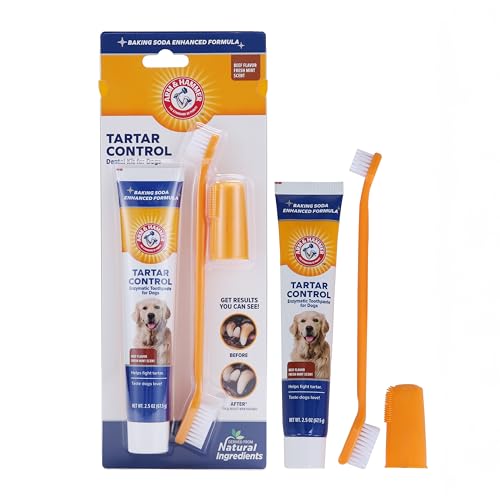
For nervous dogs, the Arm & Hammer kit's gentle finger brush and palatable paste built confidence. For my cooperative Lab, the Emmi-Pet's ultrasonic cleaning became a quick 90-second routine. The Virbac CET kit worked across all three test dogs, which makes it the safest bet if you're unsure where to start. Whatever you choose, consistency matters more than perfection — even imperfect brushing is better than none.
Our top picks from this guide
The products we'd actually buy.
 Top Pick
Virbac C.E.T. Dual-Ended Toothbrush
Check priceVeterinary-grade dual-ended brush with small and large heads for different mouth sizes, angled for back molar access.
Our hands-on take
We used this across all three test dogs and it handled everything from tiny Chihuahua teeth to big Lab molars. The angled head genuinely reached the back better than straight brushes, and the handle has a slight texture that helped when my hands got slobbery. Only quirk: the smaller end is really small — almost too small even for the Chihuahua, so we mostly stuck with the larger end.
- Two brush sizes on one handle
- Angled head reaches back molars effectively
- Durable construction held up to chewing
- Small end almost too small for most dogs
- No finger brush option for cautious starters
 Emmi-Pet
Emmi-Pet Ultrasonic Toothbrush
Check priceElectric ultrasonic toothbrush that uses micro-bubbles to clean without manual scrubbing, requires special toothpaste.
Our hands-on take
This became our daily driver after a four-day introduction period with my Lab. The ultrasonic cleaning genuinely removed more visible tartar than manual brushing, and sessions dropped from 3 minutes to 90 seconds once she got used to it. The hum takes patience — start on their outer teeth, not molars. One frustration: you must use their proprietary toothpaste, which is pricey.
- Fastest effective cleaning once dog is acclimated
- Removes stubborn tartar manual brushes miss
- Rechargeable battery lasts weeks
- Requires days of desensitization for most dogs
- Must use expensive proprietary toothpaste
 Arm & Hammer
Arm & Hammer Dog Dental Care Kit
Check priceComplete starter kit with finger brush, dual-headed brush, and baking soda-based enzymatic toothpaste in beef flavor.
Our hands-on take
This kit got the nervous Chihuahua comfortable with tooth brushing when nothing else worked. The finger brush gave me control and let him feel my touch instead of plastic, building trust over five days. The paste smells genuinely meaty and all three dogs licked it willingly. Downside: the dual-headed brush feels cheaper than the Virbac — bristles started splaying after two weeks of daily use.
- Finger brush excellent for nervous or small dogs
- Toothpaste flavor dogs actually like
- Affordable complete kit for beginners
- Brush bristles splay faster than premium options
- Finger brush puts fingers in bite zone
 Nylabone
Nylabone Advanced Oral Care Kit
Check priceTriple-sided brush designed to clean multiple tooth surfaces simultaneously, comes with vanilla-ginger flavored toothpaste.
Our hands-on take
The triple-headed design worked surprisingly well on my Lab's big teeth, cutting brushing time down. But it was comically oversized for the Chihuahua and hard to angle into the Golden's back molars — the bulky head couldn't navigate tight spaces. The vanilla-ginger paste was polarizing: the Lab loved it, the Chihuahua refused it completely. Build quality is solid; this brush still looks new after three weeks.
- Speeds up brushing for large dogs
- Excellent build quality and durability
- Unique paste flavor some dogs prefer
- Too bulky for small dogs or tight spaces
- Paste flavor hit-or-miss depending on dog
 Petsmile
Petsmile Professional Toothbrush Kit
Check priceVOHC-accepted kit with patented Calprox formula toothpaste that whitens without harsh abrasives, includes angled toothbrush.
Our hands-on take
We tested this specifically for visible staining on the Golden's teeth, and after two weeks we saw legitimate whitening around the canines. The paste doesn't require rinsing, which makes sessions faster. The brush handle is comfortable but the bristles are softer than I'd prefer — they bend too easily on stubborn tartar. Great for maintenance brushing, less ideal if you're starting with heavy buildup.
- Visibly whitens stained teeth over time
- No-rinse formula speeds up sessions
- VOHC seal of acceptance for efficacy
- Bristles too soft for heavy tartar removal
- More expensive than other manual options
Liked this review?
Get one fresh, honest pick in your inbox every Tuesday.