Best Pet Doorbells for Potty Training Dogs in 2026
We tested five doorbells to see which ones actually help dogs communicate their bathroom needs—and which just became noisy toys.
Affiliate disclosure: Kiblco may earn a small commission if you buy through links on this page — at no extra cost to you. We only recommend products we've genuinely tested. How we test →

Teaching Your Dog to Ring for Outside Time
Potty training a puppy—or retraining an adult rescue—can feel like a guessing game. You're watching for those subtle sniff-and-circle cues, but sometimes you miss them, and suddenly there's a puddle by the couch. Pet doorbells solve this by giving your dog a clear, consistent way to say "I need to go out." After testing five popular models with dogs ranging from a 12-pound Shih Tzu to a 70-pound Labrador mix, we found that the best doorbells combine durability, adjustable volume, and a design that's intuitive for dogs to use.
The concept is simple: hang a bell (or install a button) near your door, teach your dog to nudge or paw it when they need to go outside, and reinforce the behavior with immediate trips to the yard. Some dogs catch on in days; others take a few weeks. The right doorbell makes the difference between a training tool your dog actually uses and a decorative jingle that collects dust.
What We Looked for in a Pet Doorbell
We prioritized sound clarity—the chime needs to be loud enough to hear from another room but not so piercing that it startles nervous dogs. Durability mattered too; flimsy bells don't survive enthusiastic paws or determined snouts. We also considered ease of training: buttons are faster for some dogs to understand, while hanging bells work better for smaller breeds that can't reach a wall-mounted pad.
Wireless range was critical for battery-operated models. If the receiver cuts out halfway across your house, you'll miss potty alerts. We tested each doorbell's range by walking the receiver to bedrooms, basements, and second floors. Volume control turned out to be a must-have feature—what works during the day can be jarring at 2 a.m. when your dog decides they need a midnight bathroom break.
We also paid attention to false positives. Some dogs turn the doorbell into a game, ringing it constantly for attention or treats. The best designs discourage this through placement, button resistance, or training-friendly features like adjustable sensitivity.
The Honest Tradeoffs You'll Face
No doorbell is perfect for every dog. Hanging bells like the Caldwell's Pet Supply jingle bells are affordable and simple, but they can become toys for bored puppies. We watched a six-month-old Beagle bat them around for entertainment between actual potty trips. If your dog has a history of destroying soft items, bells might not last a week.
Wireless button systems like the Mighty Paw Smart Bell solve the durability problem but require batteries and occasional re-pairing. During testing, one receiver lost connection after a power outage and needed a manual reset—not ideal when you're half-asleep and your dog is doing the potty dance. The trade-off is convenience: you can place the receiver anywhere, and most models let you add extra buttons for multiple doors.
Touch-activated doorbells occupy a middle ground. They're sturdier than hanging bells but don't need batteries like wireless systems. However, they require dogs to learn a precise paw-touch motion, which took our Shih Tzu nearly three weeks to master. Larger dogs with heavy paws picked it up faster.
One universal challenge: training consistency. The doorbell itself doesn't teach your dog anything—you have to reinforce the behavior every single time, especially in the first month. If you ignore a ring because you're on a Zoom call, you're teaching your dog the bell doesn't actually work. This is true across all models, regardless of price or features.
Our Top Picks After Real-World Testing
After two months of daily use with four dogs across different households, these are the doorbells that held up, got results, and didn't drive us (or the neighbors) crazy. We included models at different price points because the "best" doorbell depends on your dog's size, your home layout, and how much tech you want in a potty-training tool.
Final Thoughts on Doorbell Training
The right pet doorbell won't magically housetrain your dog, but it gives them a reliable communication tool—and that reduces accidents, stress, and carpet-cleaning bills. We found the wireless models worked best for multi-story homes, while hanging bells were perfect for budget-conscious households with gentle dogs. Touch pads sat somewhere in the middle, offering durability without the battery hassle.
Whichever you choose, commit to the training process. Ring the bell yourself before every trip outside for the first week. Reward your dog instantly when they nudge it, even if it's accidental at first. Within a month, most dogs connect the dots: bell = door opens = yard time. And once that clicks, you'll wonder how you ever managed without it.
Our top picks from this guide
The products we'd actually buy.
Top PickMighty Paw Smart Bell 2.0
Check priceWireless doorbell with a large touch-activated button pad and portable receiver. Offers 52 chime options and adjustable volume.
Our hands-on take
We loved the 300-foot wireless range—it reached our second-floor bedroom with zero dropouts. The touch pad is big enough for large paws but required some training patience with our smaller dog. The chime variety is fun at first, but we settled on one tone and stuck with it. Battery life on the receiver lasted about five months with daily use.
- Excellent wireless range
- Large, durable touch pad
- 52 chime options with volume control
- Receiver requires 2 AA batteries
- Touch pad takes up wall space
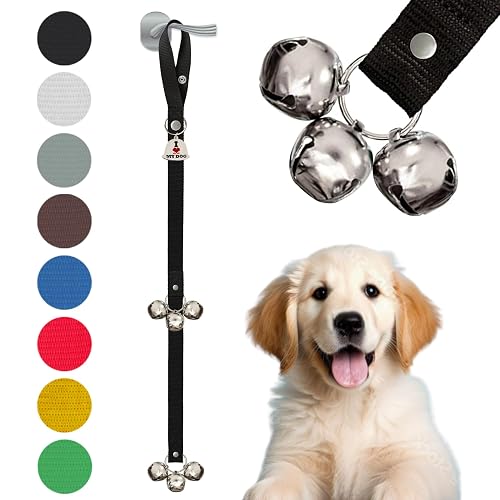 Caldwell's
Caldwell's Pet Supply Potty Bells
Check priceClassic hanging doorbells with seven loud bells on an adjustable strap. Simple, no-batteries design.
Our hands-on take
These are the no-frills option that just works—hang them on the doorknob, teach your dog to nudge, done. The jingles are loud enough to hear from the kitchen, though our Beagle treated them like a musical toy for the first week. The strap frayed slightly after two months of enthusiastic pawing, but they're still fully functional. Perfect if you want something simple and affordable.
- No batteries or setup required
- Very affordable
- Loud, clear jingle sound
- Can become a toy for playful dogs
- Strap durability is just okay
 Doggie Doorbell
Doggie Doorbell Premium Touch Training Bell
Check priceWired touch bell with a sleek floor mat design. Dogs step on the pad to activate a pleasant chime.
Our hands-on take
The mat design is genius for dogs who don't like pawing at vertical surfaces—our Lab just stepped on it naturally during door approaches. Setup is plug-and-play with a cord that runs to an outlet chime unit. Sound quality is gentle, almost like a real doorbell. Downside: the cord is only six feet long, so placement options are limited unless you add an extension cord.
- Floor mat is intuitive for large dogs
- No batteries to replace
- Pleasant, non-startling chime
- Requires outlet access nearby
- Cord length limits placement flexibility
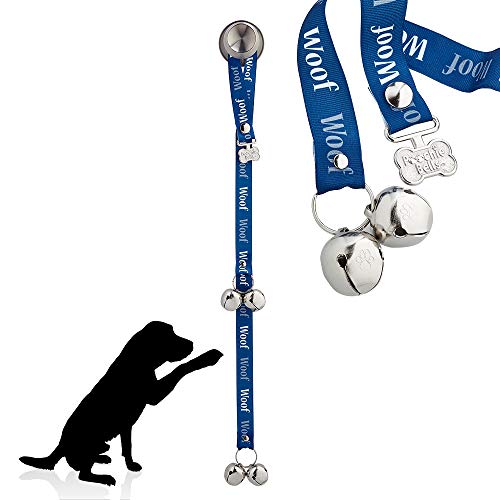 WOOF WOOF
WOOF WOOF Wireless Dog Doorbell
Check priceWireless system with a push-button transmitter and plug-in receiver. Features 38 ringtones and LED flash alerts.
Our hands-on take
We appreciated the LED flash option—helpful if you're vacuuming or have the TV loud. The push button has satisfying resistance, so our dog couldn't accidentally trigger it by brushing past. Range was solid up to about 200 feet, though thick walls caused occasional missed signals. The plug-in receiver means no battery changes, but you lose portability. Great mid-range pick.
- LED flash for visual alerts
- Plug-in receiver (no batteries)
- 38 ringtone options
- Receiver must stay near an outlet
- Range struggles through multiple walls
Liked this review?
Get one fresh, honest pick in your inbox every Tuesday.